
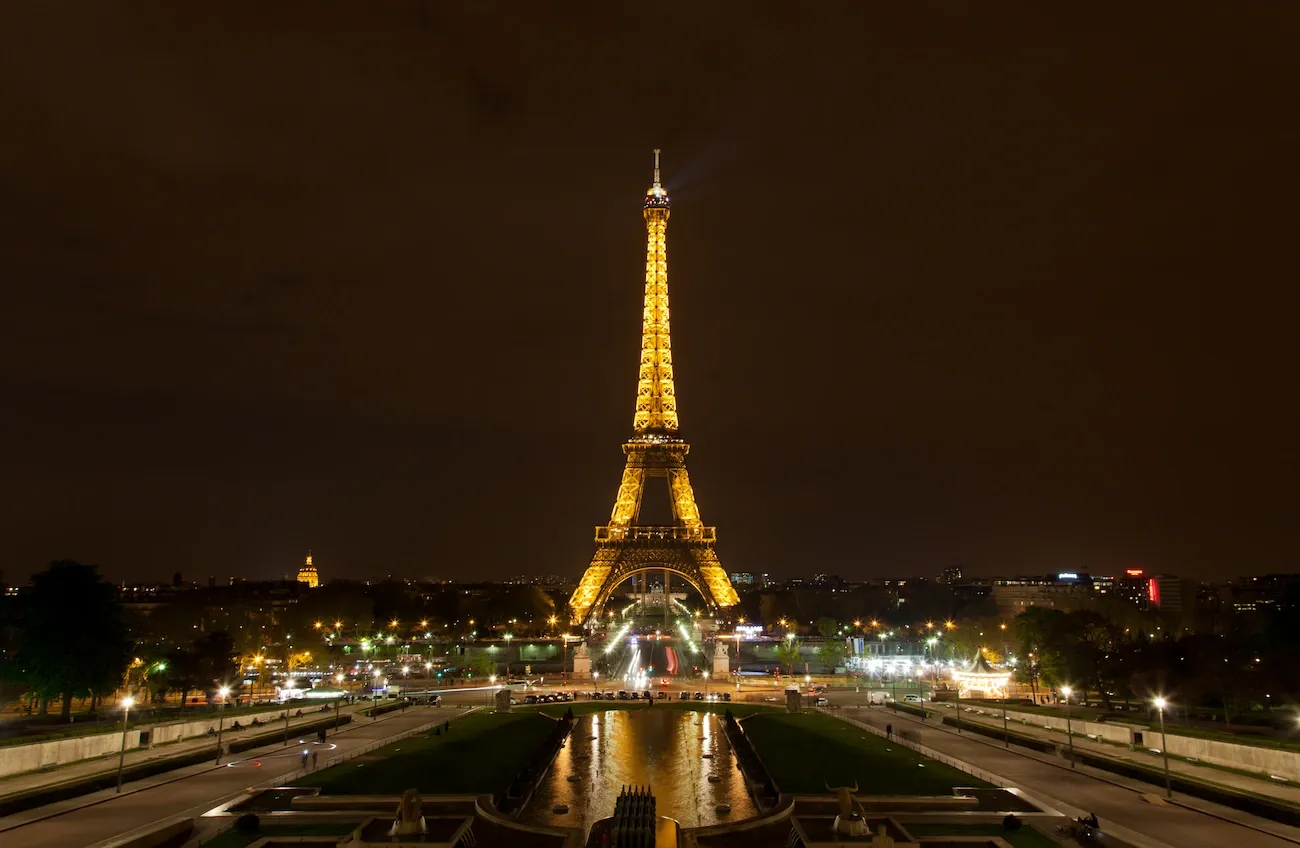
Eiffel Tower light shows
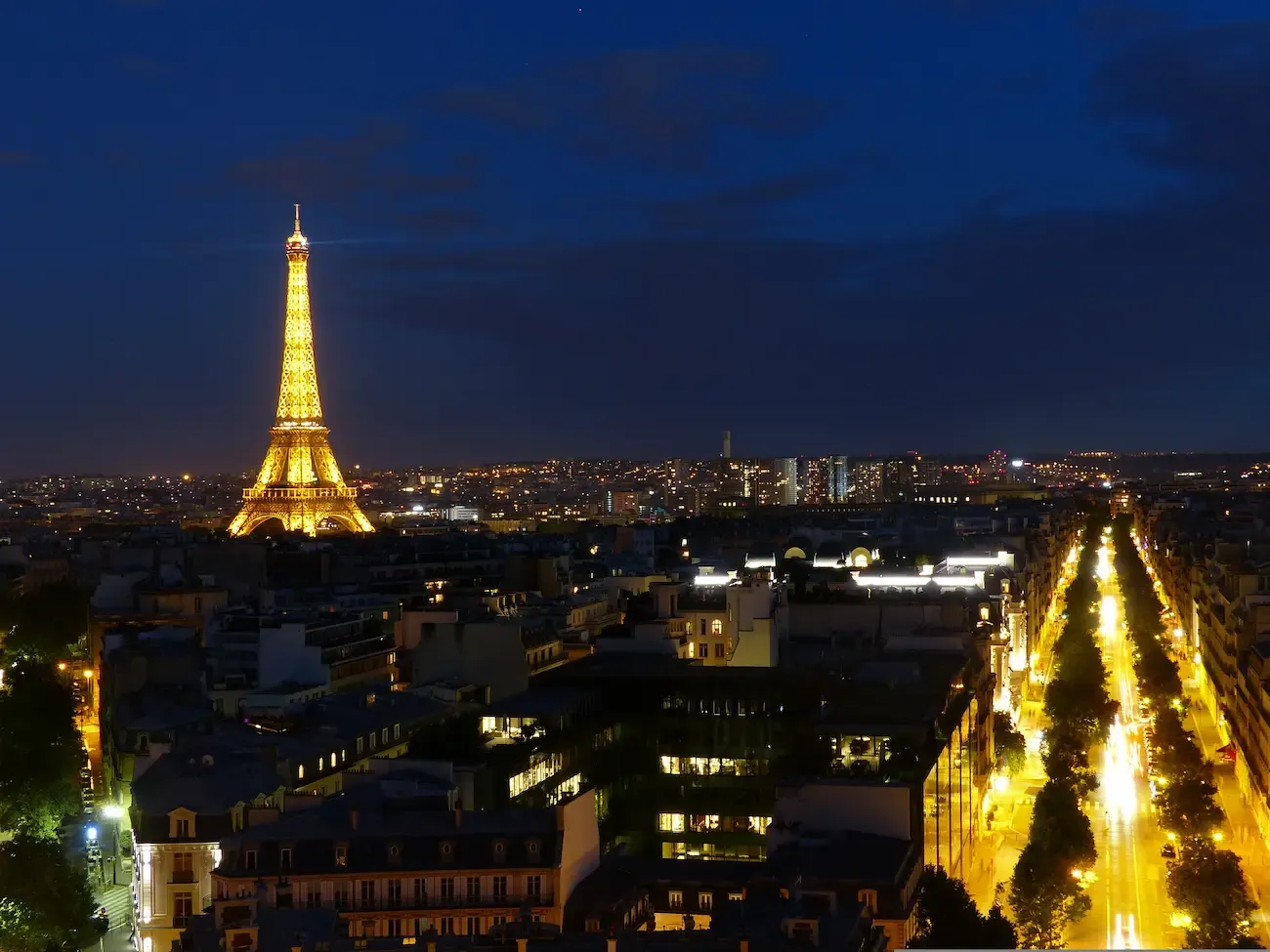
The Eiffel Tower light show has three layers: a permanent golden wash on the ironwork after dusk, a sparkle of 20,000 bulbs that fires for 5 minutes at the top of every hour, and a summit beacon that sweeps the horizon. The final sparkle runs at 23:00, with full shutdown by 23:45.
What is the next light show at the Eiffel Tower?
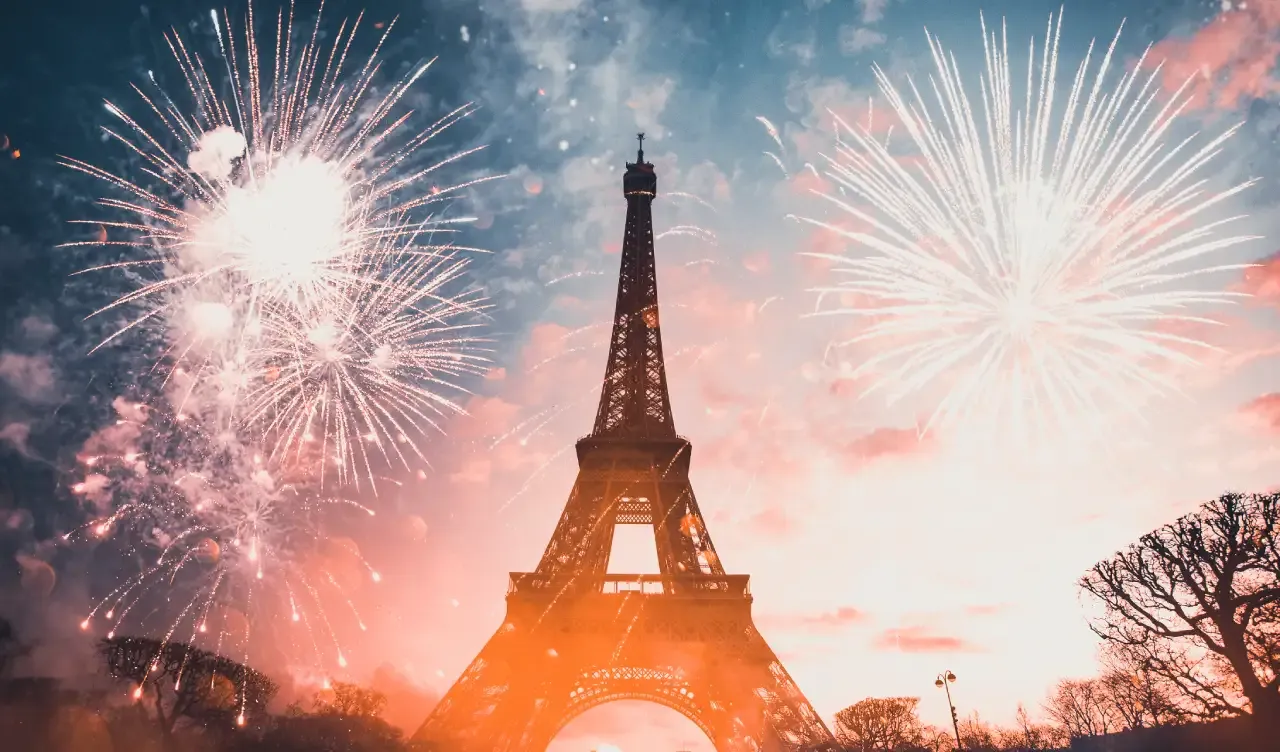
What is the next light show at the Eiffel Tower?
The next major illumination event at the monument occurs for Bastille Day. For Bastille Day in 2026, the City of Paris’s fireworks display will exceptionally be held on the evening of Monday, July 13, 2026, instead of July 14. Technicians synchronize the illumination system with music and pyrotechnics launched directly from the structure, drawing large crowds to the Champ de Mars and Trocadéro gardens.
Aside from this event, the regular schedule continues daily. Individuals seeking information on Eiffel Tower lights today will find that the standard golden illumination activates automatically ten minutes after sunset. The structure then executes its hourly five-minute sparkling sequence until 01:00 during summer.
What should you know about the Eiffel Tower lights?
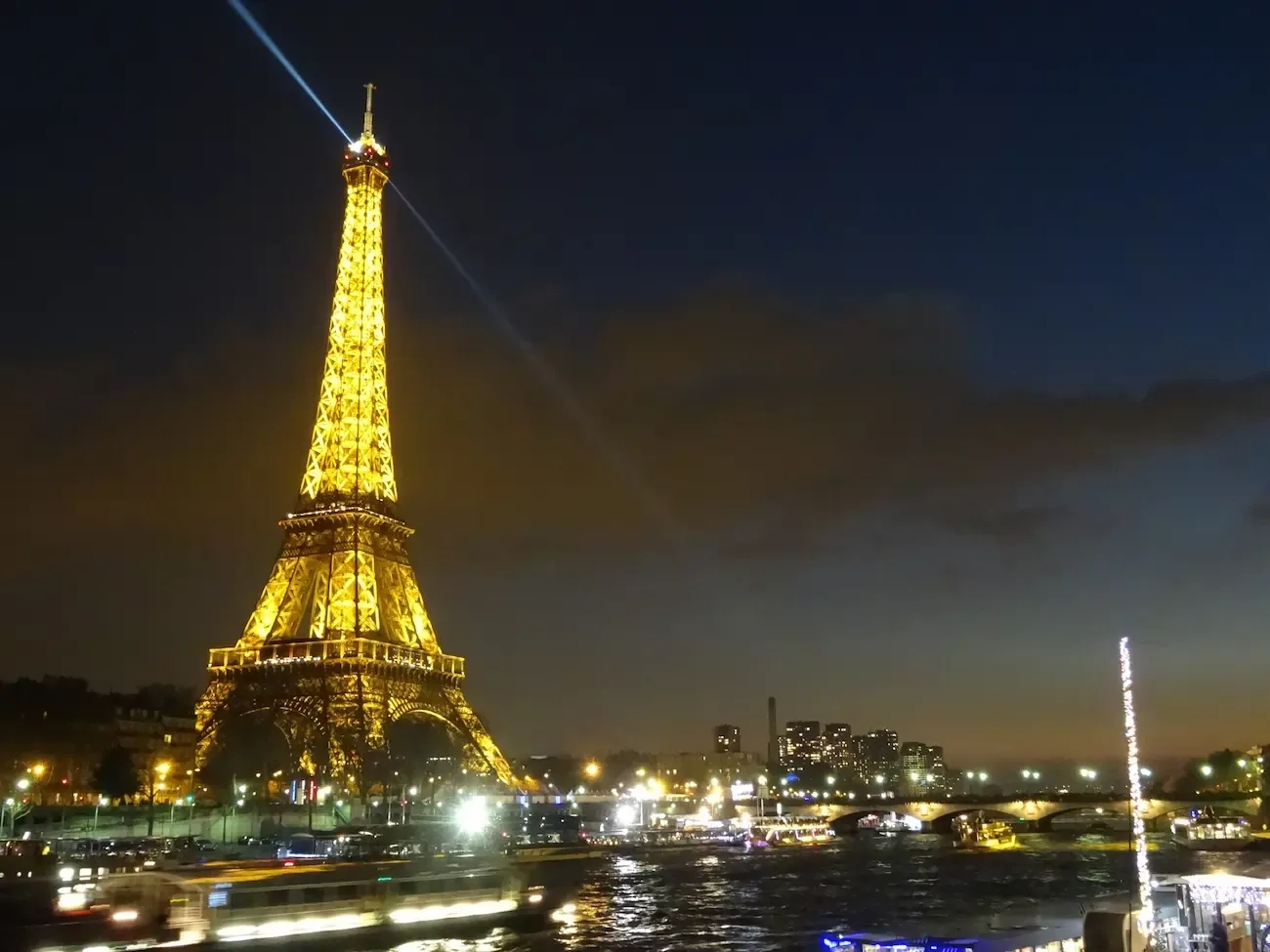
When the sparkle happens?
While it happens every night, the exact time of the first and last sparkle depends on the month and Paris's recent energy-saving measures. Review the month-by-month sparkle shedule to make sure you are in the right place at the perfect time.
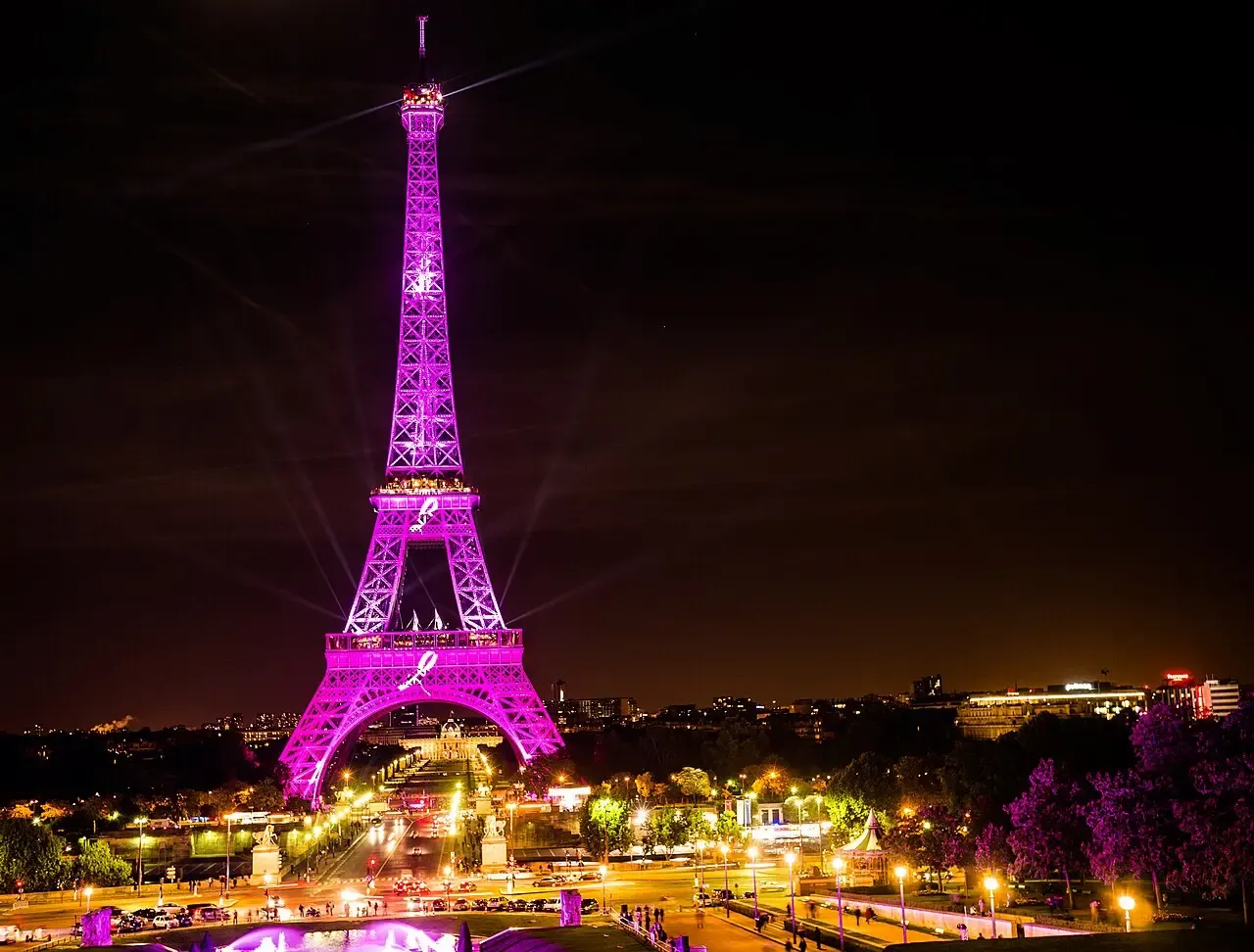
September pink tribute
Every year on September 30, the Eiffel Tower trades its iconic golden glow for a stunning rose-colored wash to launch France's breast cancer awareness month. If you want to know exactly when and where to catch this four-hour event, check out our complete guide to the september pink tribute.
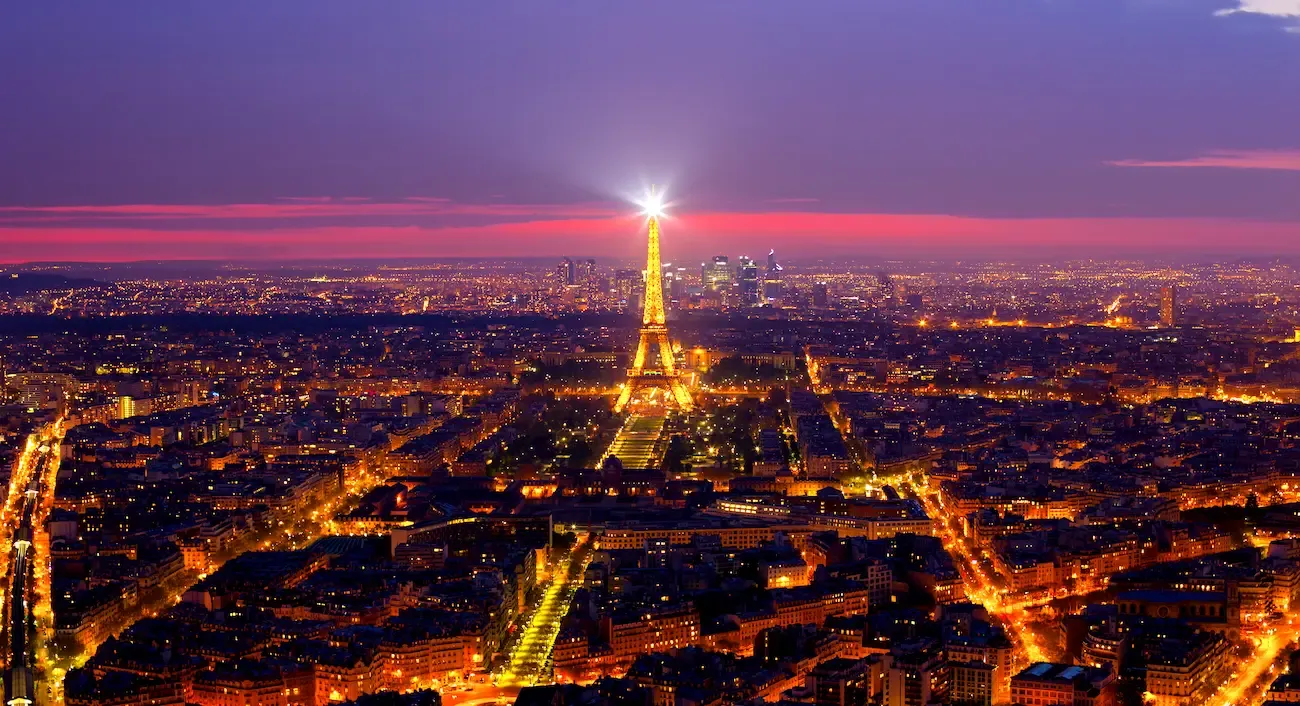
Christmas illuminations
Read our complete guide to learn exactly how the Eiffel Tower lights at Christmas, including the early sparkle times and what actually happens on New Year's Eve.
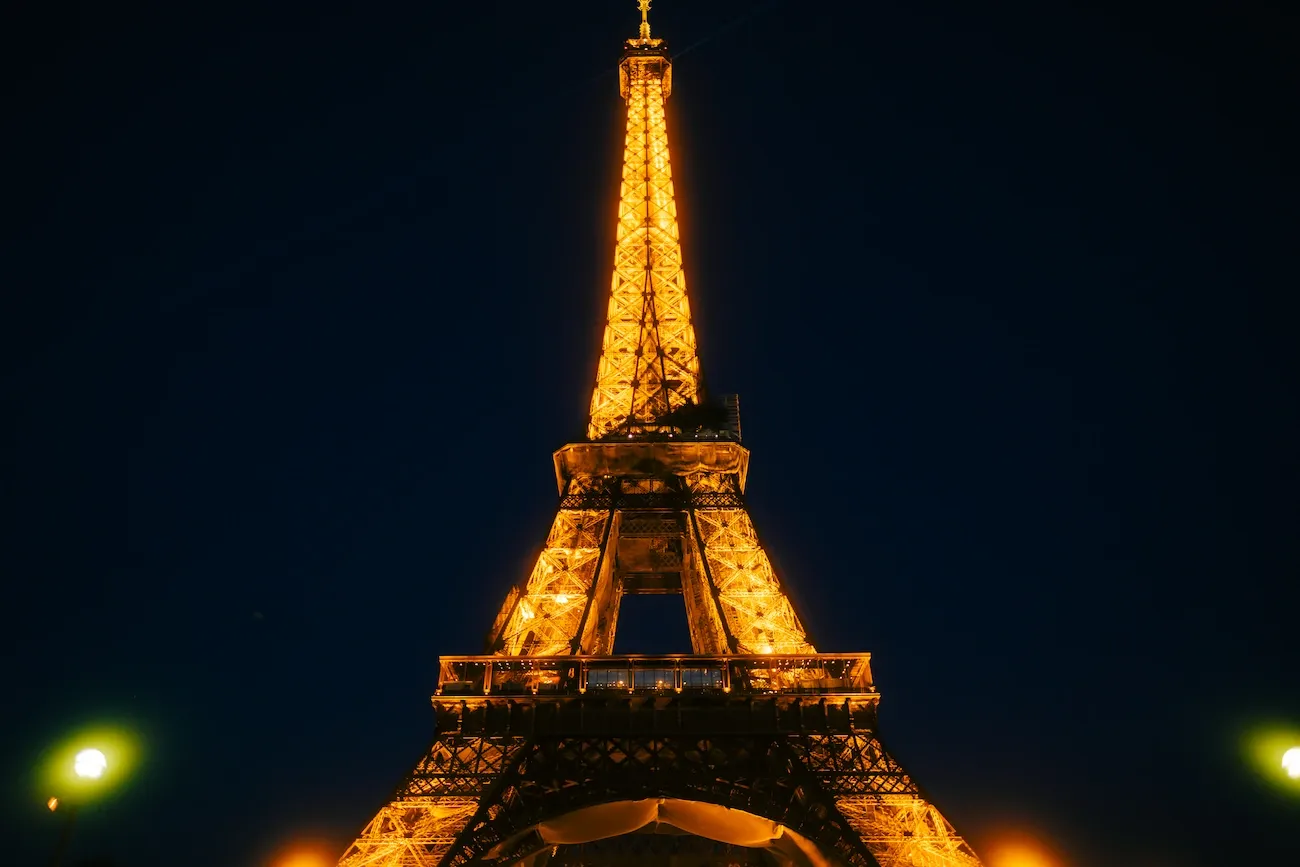
How many lights are on Eiffel Tower?
If you have ever looked up at the sparkling Paris skyline and wondered exactly how many lights are on the Eiffel Tower, the answer is a precise 20,340. Discover how specialist climbers installed the 20,000 twinkling bulbs and learn the history behind this masterpiece.
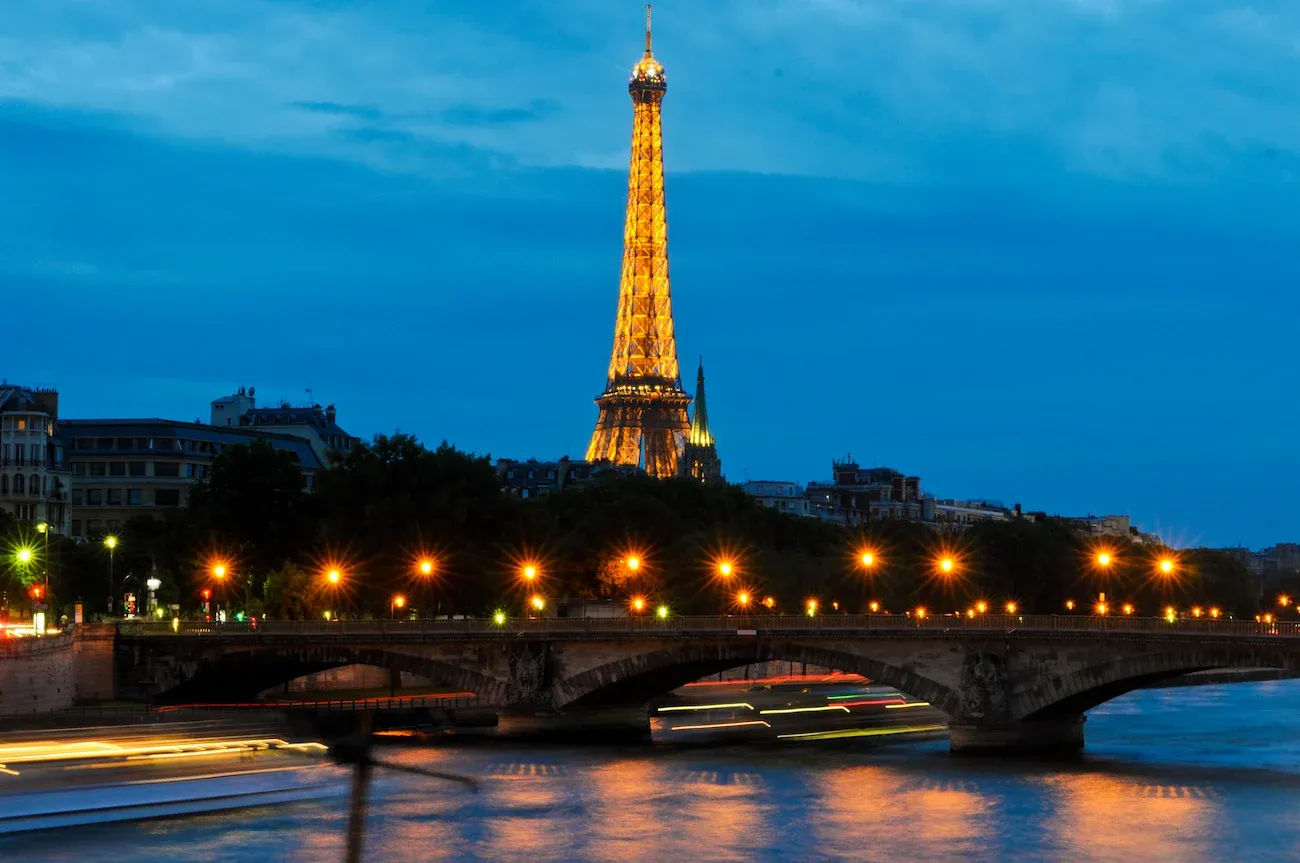
Best viewing spots
When planning your evening in Paris, Place du Trocadéro is often considered the absolute best place to see eiffel tower sparkle. Our guide breaks down this iconic elevated viewpoint, along with other great spots like the Champ de Mars, so you can capture the perfect photo of the 5-minute light show.
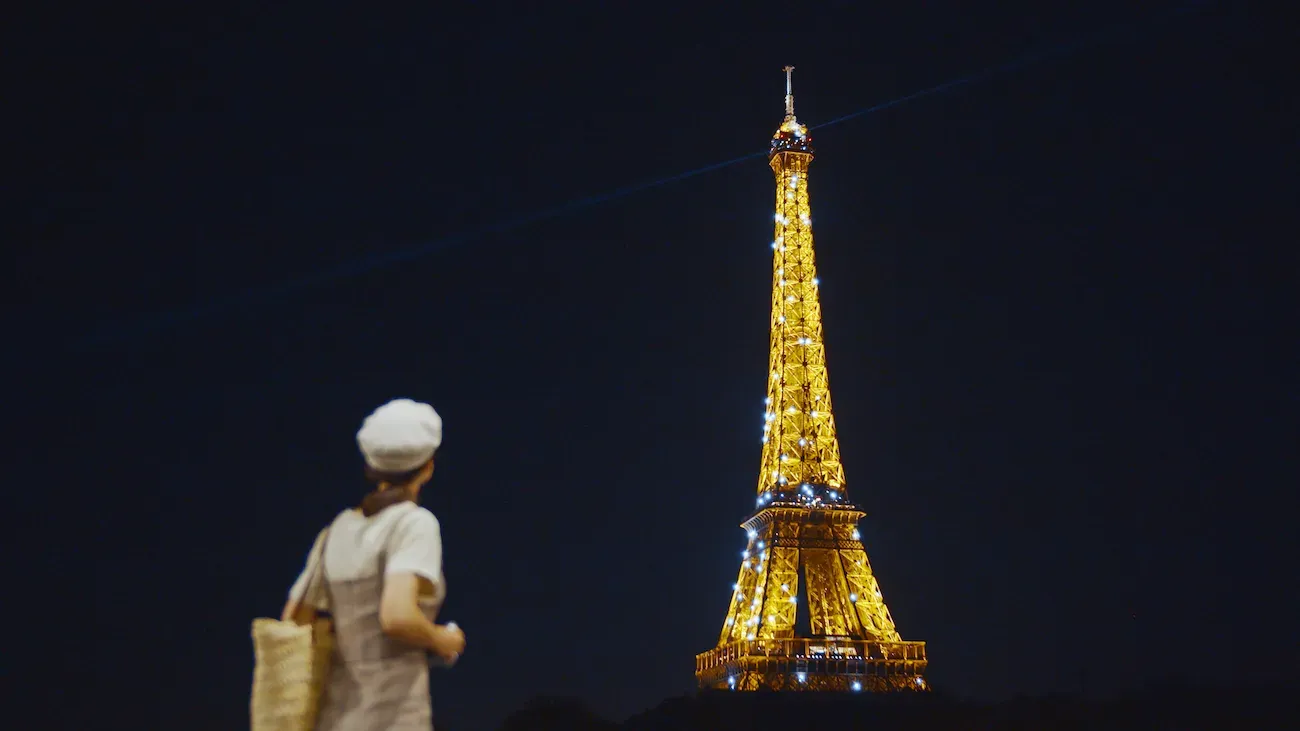
Visiting Eiffel Tower at night
While the city is beautiful by day, visiting the Eiffel Tower at night completely transforms the atmosphere into something incredibly romantic and magical for any traveler.
Are there different Eiffel Tower light shows?
Yes, the monument features different types of illumination throughout the night and during specific times of the year:
- The primary display consists of the golden illumination, which covers the entire framework using high-pressure sodium lamps. This foundational layer remains active from dusk until the structural shutdown.
- The second type is the sparkling effect, which occurs on the hour for five minutes. This sequence utilizes 20,000 specific lightbulbs that flash independently across the four facades. Additionally, a beacon at the summit projects two intersecting light beams that rotate 360 degrees, reaching a distance of 80 kilometers.
- Finally, the city programs temporary color alterations to mark international campaigns, historic anniversaries, or athletic tournaments, modifying the appearance of the Eiffel Tower lighted framework for designated periods.
Special illuminations for Bastille Day, Christmas, and symbolic moments
Some nights each year break the regular three-system pattern. The tower runs a one-off lighting sequence for a national holiday, a memorial, or another symbolic gesture by the operator. Their schedule is separate from the hourly sparkle cycle.
- Bastille Day. Each 14 July, France fires its national fireworks display from the Eiffel Tower itself. The standard beacon and sparkle give way to a custom lighting sequence from around 23:00 until midnight, syncing with the bursts above the Champ de Mars.
- New Year's Eve. Midnight on 31 December brings a year-end-only sparkle-plus-beacon show. The beacon stays in full sweep over Paris for the first minutes of the new year.
- Christmas and the Diamond Light. A "Diamond Light" seasonal campaign runs around 25 December alongside the regular 5-minute hourly sparkle.
- Symbolic lights-off gestures. Some nights, the operator switches the lights off early as a tribute to a memorial or public cause. Mayor Anne Hidalgo's 14 December 2016 request for the tower to go dark is the best-known example.
- Seasonal colour campaigns. Single-colour washes show up for specific moments. Blue marks European-presidency rotations. October goes pink for breast-cancer awareness. Flag-colour sequences appear after big international events. None of these run on a fixed annual calendar; the operator announces them one by one.
Want to plan a visit around one of these? Check the monument's official events calendar for the year. Only Bastille Day and New Year's Eve fall on dates known in advance.
Annual calendar of special illuminations in 2026
Three moments anchor the annual calendar of special illuminations in 2026: Bastille Day fireworks, the Pink October launch, and the year-end sparkle, while the rest of the colourful tributes go up event by event, often confirmed only days in advance.
The 2026 calendar so far, month by month:
| Date / Period | Event | Description |
|---|---|---|
| Every night | Golden Lighting | The Eiffel Tower is illuminated with its signature golden lighting from dusk until closing time. |
| Every night (at the beginning of each hour after dusk) | Sparkling Lights | Thousands of flashing bulbs sparkle for approximately 5 minutes at the start of each hour. |
| 9 May | Europe Day | The Tower has previously displayed blue illumination and European Union-themed lighting for Europe Day, subject to official confirmation each year. |
| 13 July 2026 | Bastille Day Celebration | The Eiffel Tower serves as the centerpiece of France’s National Day celebrations, with the annual fireworks display, special lighting effects, and audiovisual programming around the Champ de Mars. |
| Late September / Early October | Octobre Rose (Breast Cancer Awareness Campaign) | The Tower regularly participates in France’s breast cancer awareness campaign through pink illumination on selected dates announced by organizers. |
| Variable Dates | National and International Tributes | Special illuminations may be organized for commemorations, international solidarity initiatives, state visits, major sporting events, cultural celebrations, or awareness campaigns. |
In previous years, these events have featured special performances:
- May: Blue with twelve yellow stars for Europe Day on 9 May, the same treatment used for the French EU Council Presidency launch in January 2022 and for the 20th Europe Day anniversary on 9 May 2006. Green has run for climate-conference moments and may return for COP-aligned dates.
- November: Blue-white-red sequences around 11 November (Armistice Day) and 13 November (anniversary of the 2015 Paris attacks). The November 2024 tricolour tribute requested by Mayor Anne Hidalgo ran for three consecutive nights, 16–18 November.
A second band of colour tributes sits outside the dated calendar:
- Pride lighting: Rainbow washes for the Paris Pride season around the Marche des Fiertés in late June, and for international Pride memorial moments. The rainbow precedent dates to 13 June 2016, when the tower honoured the victims of the Orlando shooting.
- Solidarity with Ukraine: Blue-and-yellow sequences have appeared on multiple nights since February 2022, aligned with diplomatic moments and anniversaries of the war.
- Diplomatic visits: A head-of-state visit can draw a one-night colour wash in the flag colours of the visiting country, the same logic that turned the tower red for Hu Jintao in 2004 and white for selected state visits.
- National mourning: Lights-off gestures and blue-white-red sequences after major attacks or the death of a public figure, including the 14 December 2016 lights-out request and the 8 December 2017 white wash for Johnny Hallyday.
- Cause-driven colours: One-night washes for awareness moments not tied to a fixed annual date — green for hydrogen-energy and climate events, yellow for cultural launches, purple for child-cancer awareness, gold for special honours.
What happens when the Eiffel Tower lights up at night?
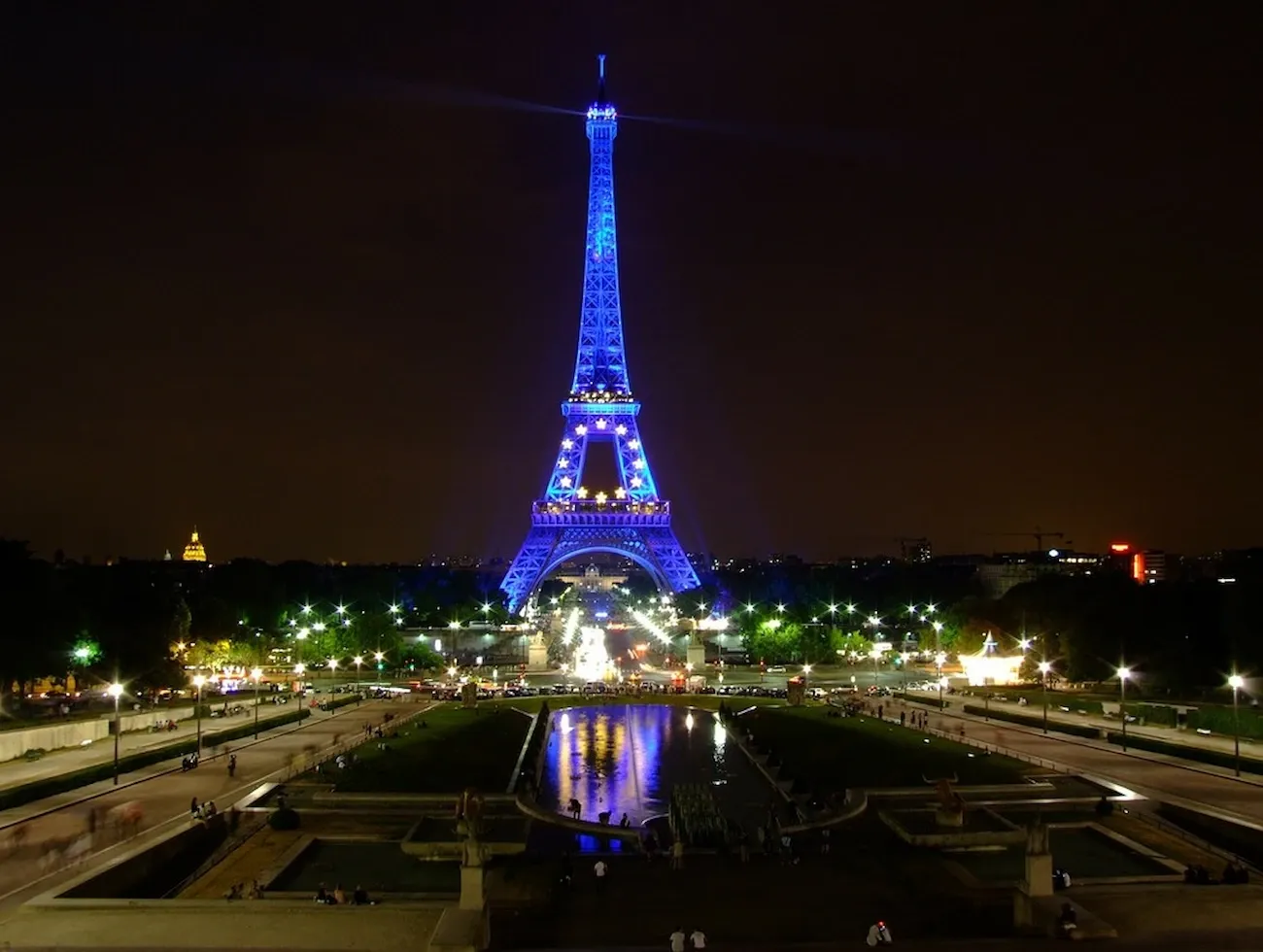
What happens when the Eiffel Tower lights up at night?
The Eiffel Tower runs three lighting systems each night: a permanent golden wash, a 5-minute sparkle of 20,000 bulbs at the top of every hour, and a summit beacon sweeping the horizon. The final sparkle fires at 23:00, with shutdown by 23:45.
Dusk sensors trigger the show, so nightfall sets the start time, not a fixed clock. After shutdown, the tower and the Champ de Mars (the public greenspace in the 7th arrondissement where the tower stands) stay dark until the following evening.
As a user explains on TripAdvisor: “We waited until 11pm on the grass in front of the tower for the lights to sparkle and when they did I could hardly contain my excitement, it was one of the most beautiful things I had ever seen and so romantic.”
When does the Eiffel Tower light up?
5 minutes at the top of every hour, from nightfall to the final 23:00 sparkle, with full shutdown by 23:45. A dusk sensor fires the system, so the first sparkle lands earlier in winter and later in summer. For the monthly schedule, the mechanism behind each flash, and the September 2022 change that moved the last sparkle from 01:00 to 23:00, see when the light show begins each evening. The 23:00 sparkle aligns with monument closure, check the Eiffel Tower opening hours and seasonal schedules before booking an evening ascent.
A brief history of the Eiffel Tower's lights
Lights of some kind have run on the Eiffel Tower since 1889. Every new system has replaced the one before it, from the gas lamps of the inauguration to today's 5-minute sparkle, which took shape after the 2008 duration cut.
- 1889: Gas lamps lit the tower at its inauguration. The opening fell during the Exposition Universelle, the Paris world's fair marking the centennial of the French Revolution. Gustave Eiffel's engineering company handled the installation as part of the construction handover.
- 1900: Electricity replaced gas. Projectors and decorative bulbs took over from the gas fixtures, putting the tower among the first Paris landmarks to run entirely on mains power at the turn of the 20th century.
- 1958: A new exterior spotlight system of 1,290 lamps went into service. The lamps sat at ground level and threw a flat white wash up the tower's four legs from below. The setup stayed in place for 27 years.
- 31 December 1985: Pierre Bideau's golden lighting design went live. The new system replaced the 1,290-lamp ground array with 336 yellow-orange sodium projectors built into the ironwork, so the tower glows from inside its own structure instead of from the ground.
- 1 January 2000: Two new systems debuted for the Y2K celebration: a sparkle of 20,000 small bulbs, and a summit beacon of four motorised xenon floodlights. Both went up as temporary features for millennium night. Only the beacon stayed when the celebrations ended.
- 21 June 2003: Public demand brought back the Y2K sparkle on the night of the summer solstice. Crews refitted Pierre Bideau's original cabling and bulb layout across the tower's four faces.
- 2008: Each hourly flash dropped from 10 minutes to 5. The change cut energy use without altering the visual effect or the hourly cadence.
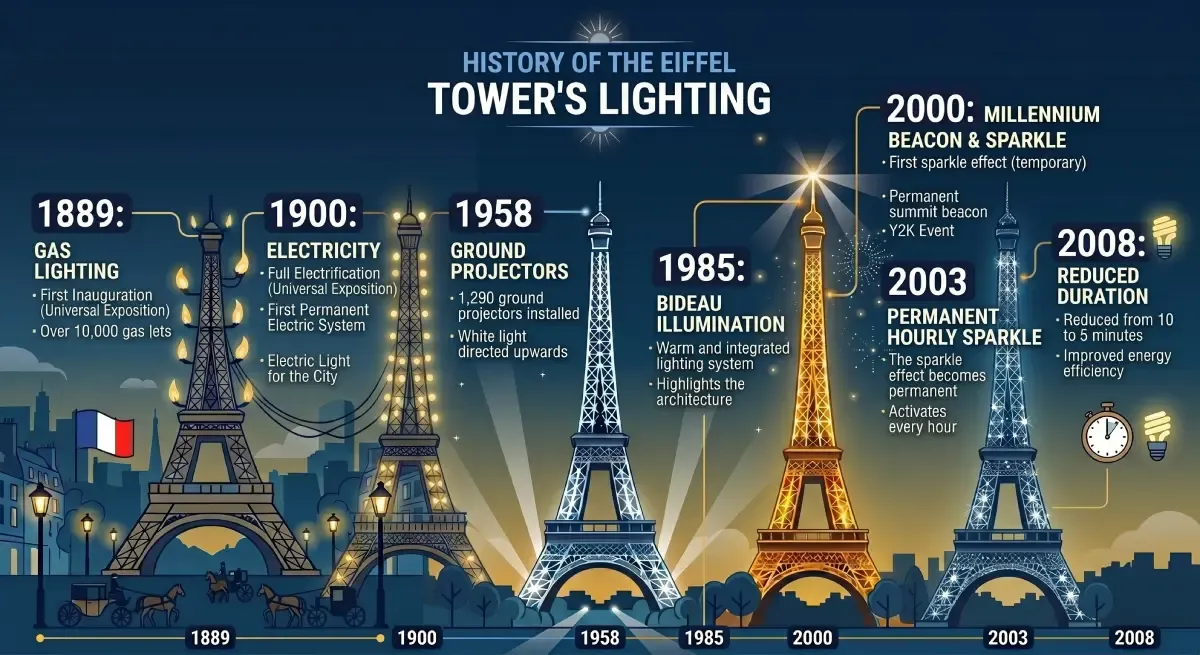
What are the Eiffel Tower's three lighting systems?
Three installations layer to create the night show. A permanent golden wash covers the ironwork after dusk. A sparkle of thousands of small bulbs fires over that golden background for 5 minutes on the hour. A summit beacon rotates above everything, signalling Paris across dozens of kilometres.
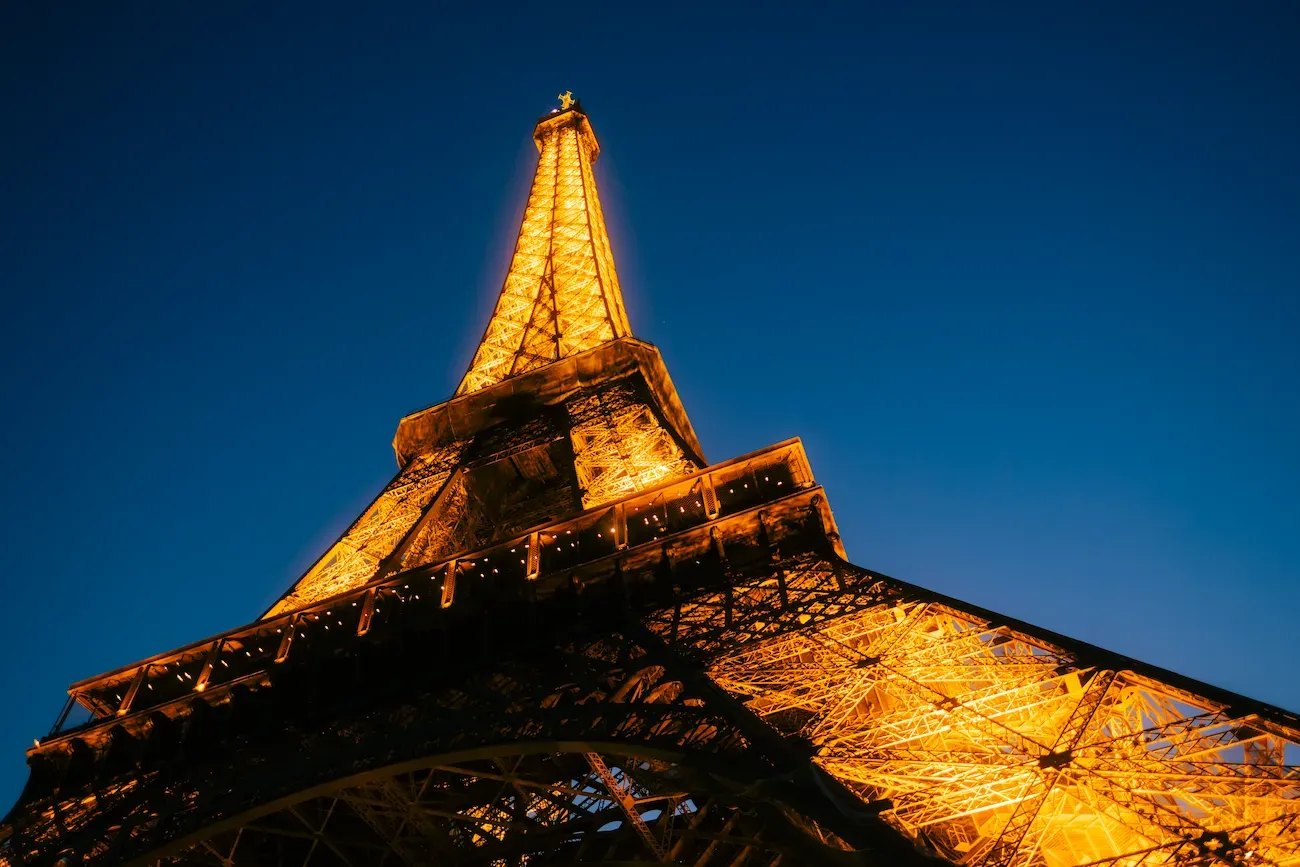
The golden wash
Pierre Bideau, a French electrician and lighting engineer, designed the current golden lighting. It debuted on 31 December 1985 and has lit the Eiffel Tower in warm yellow-orange every night since. The installation replaced 1,290 white exterior spotlights from 1958, swapping ground-mounted floodlights for 336 high-pressure sodium projectors built into the structure itself, so the light rises through the ironwork. A 2004 upgrade cut energy use by about 40% with no change to the visible effect. Bideau later designed the sparkle too.
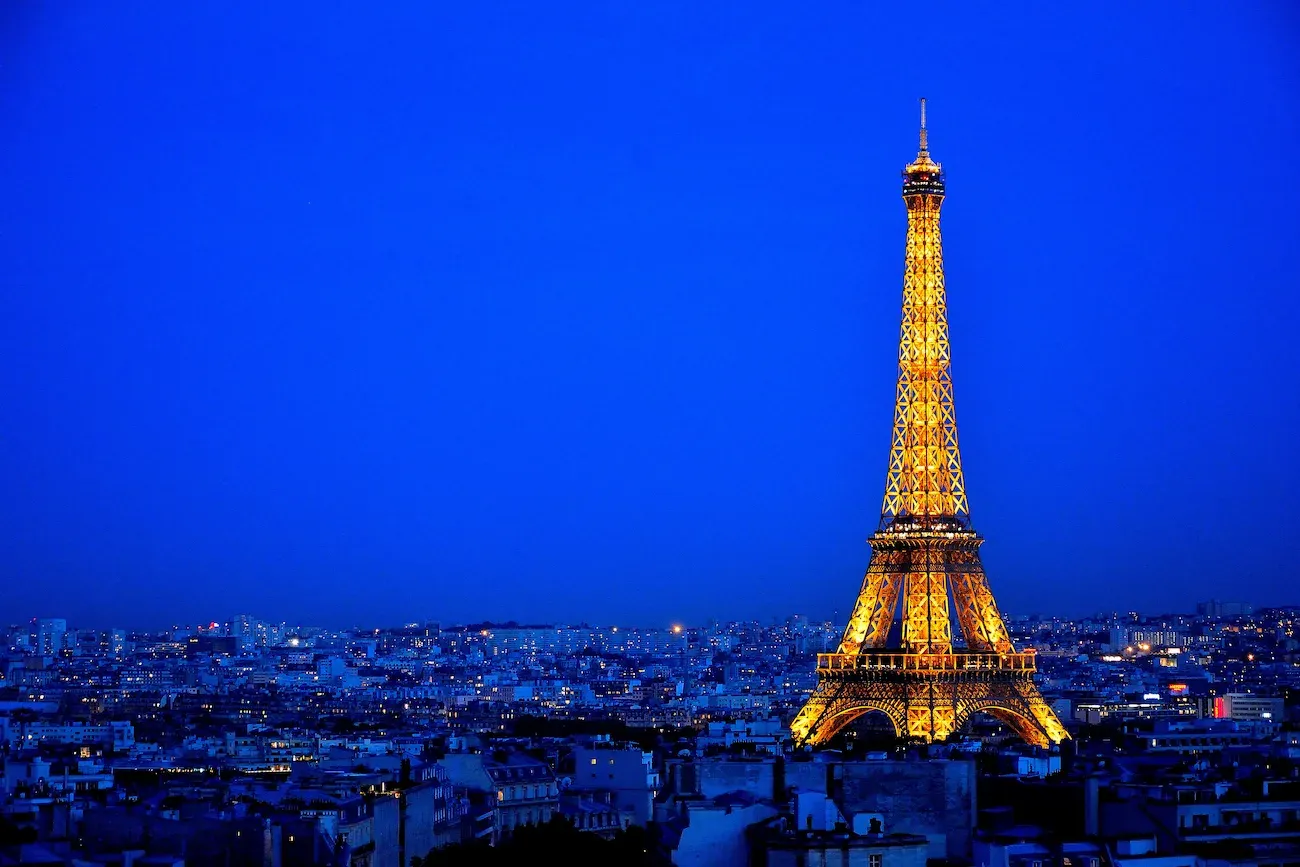
Comparison of the three systems
| System | Golden wash |
|---|---|
| Installed | 31 December 1985 |
| Components | 336 yellow-orange high-pressure sodium projectors |
| Visible effect | Steady warm glow on the ironwork, on from dusk to shutdown |
| System | Sparkle |
|---|---|
| Installed | 1 January 2000 (Y2K); permanent 21 June 2003 |
| Components | 20,000 clear 6-watt bulbs fitted across the four faces |
| Visible effect | 5-minute shimmer at the top of every hour |
| System | Beacon |
|---|---|
| Installed | 1 January 2000 |
| Components | Four motorised xenon floodlights, 6,000 watts each |
| Visible effect | Cross-shaped double beam sweeping up to 80 km |
Is the Eiffel Tower light show free?
Yes, viewing the show requires no financial payment from the public, as the display is visible from numerous open spaces throughout Paris. Spectators can access public areas such as the Champ de Mars, the Trocadéro esplanade, and the public docks along the Seine River without purchasing a ticket. These locations provide direct lines of sight to the structural framework during the nightly five-minute sparkling sequences.
Financial costs only arise if individuals choose to view the display from commercial venues, such as river cruise boats, rooftop restaurants, or if they purchase admission tickets to ascend the tower platforms during operational hours. Consequently, budget-conscious travelers can experience the complete visual presentation from street level without allocating funds for official entry passes or specialized tour packages.
Is the Eiffel Tower light show worth it?
Yes, the display serves as a significant cultural component of the Parisian evening landscape and demands minimal effort from onlookers. Because the sequence occurs automatically every hour on the hour after dusk, individuals do not need to alter their travel itineraries extensively to witness it.
The integration of 20,000 flash bulbs provides an objective demonstration of structural lighting design that contrasts with the standard urban environment. Given that observation from public spaces incurs zero cost, the activity provides high utility relative to the time investment, making it a standard recommendation for individuals analyzing urban architecture or regional tourism patterns. Additionally, the predictable timing allows visitors to combine the viewing experience with dinner plans or evening walks along the river without risking scheduling conflicts.
How much does it cost to light the Eiffel Tower?
The annual operational cost to power the lighting system amounts to approximately 963,000 Euros, which translates to a daily expenditure of roughly 2,640 Euros. This financial figure covers the electricity consumption required for both the continuous golden illumination lamps and the secondary sparkling system.
The structure consumes approximately 22 megawatts of electricity per day to maintain its entire electrical infrastructure, including the light bulbs, safety systems, and internal elevators. The initial installation of the 20,000 twinkling bulbs required an independent capital expenditure of 4.5 million Euros, involving specialized technicians to mount the equipment across the metal framework. Ongoing maintenance budgets also account for the periodic replacement of worn components to sustain system efficiency and safety standards throughout the year.
Practical tips for an evening visit
The standard operating window runs 09:30 to 23:00 daily, giving you roughly two hours of post-sunset time inside the monument to watch the lights from the upper levels. In April 2026 the hours extend to midnight. Saturday around 19:00 is the weekly traffic peak, so any weekend evening visit will hit heavier crowds in the boarding areas and on the viewing levels.
A few practical points for the late-day visit:
- Aim for the 22:45 last-ascent cutoff on standard nights, because the elevators stop boarding before the official 23:00 closure.
- Expect the top floor to feel colder and windier than ground level in any season. Dress in layers, even in midsummer.
- The summit can close in harsh weather, lightning, or high winds, no matter what ticket you hold.
- On a Saturday, arriving before 19:00 or after 21:30 cuts your wait at the second-floor elevator queue.
- A small bag speeds passage through the base security check; large rucksacks slow the boarding queue for everyone.
To combine the outside light show with a late ride up, see Eiffel Tower tickets and evening ascent options on the main information page. Small-group departures with a licensed guide work well after sunset. Families can book an Eiffel Tower elevator guided tour for skip-the-line access on a structured evening ascent. Climbing the 674 steps to the second floor during the sparkle hour gives you the full feel of the lattice. For that route, choose the Eiffel Tower stairs guided tour.