
When does the Eiffel Tower turn pink?
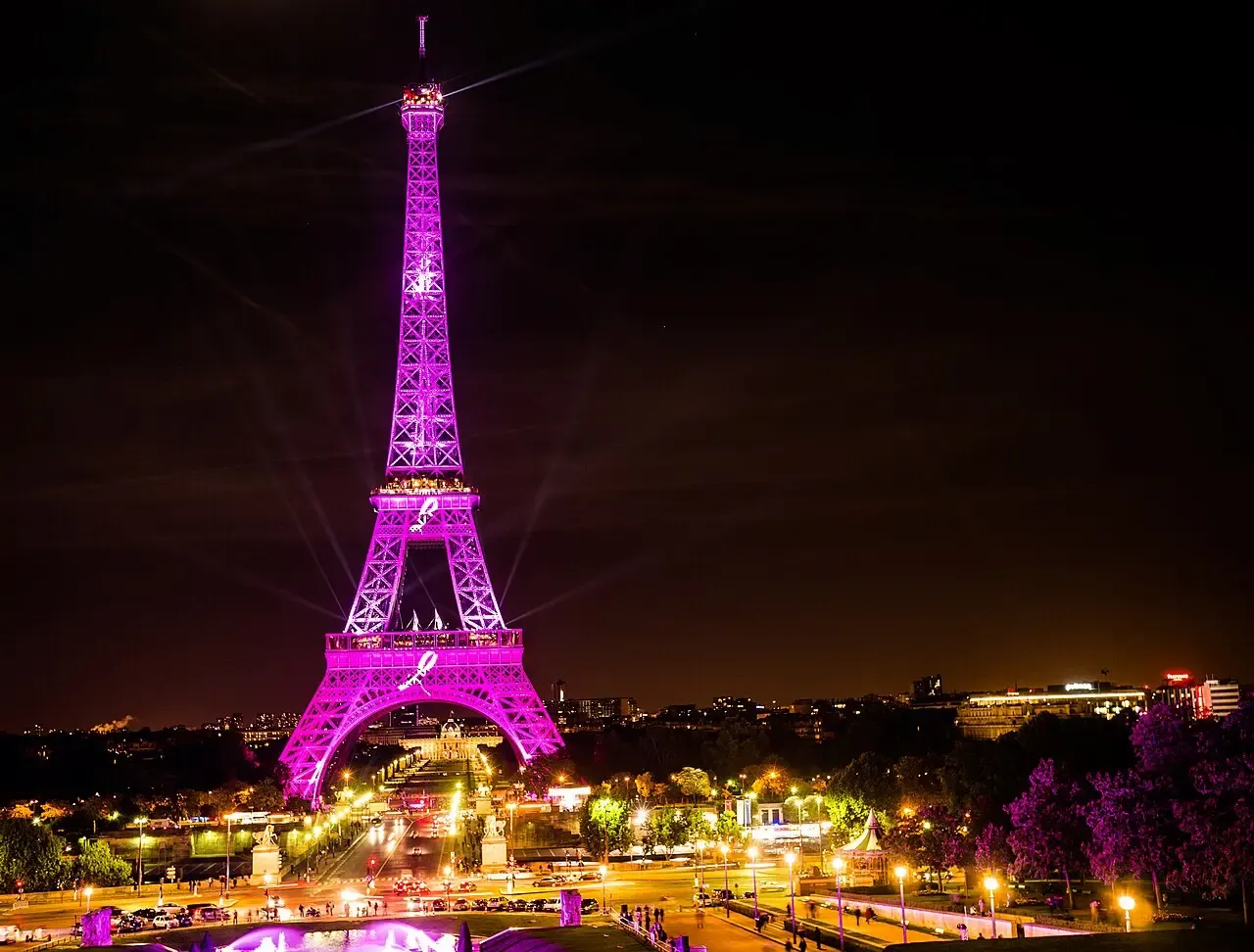
The Eiffel Tower (Tour Eiffel) turns pink every year on September 30, from 8 PM to midnight, to launch Octobre Rose, the French breast cancer awareness campaign. SETE (Société d'Exploitation de la Tour Eiffel) operates the tower and schedules the pink illumination each year, with additional pink lightings on selected awareness dates during October.
Annual date
September 30 every year, regardless of the day of the week.
Four-hour window
Pink lighting runs from 20:00 to 24:00 Paris time.
Opens Octobre Rose
Launches the French Pink October breast cancer awareness campaign.
When does the Eiffel Tower turn pink?
When does the Eiffel Tower turn pink?
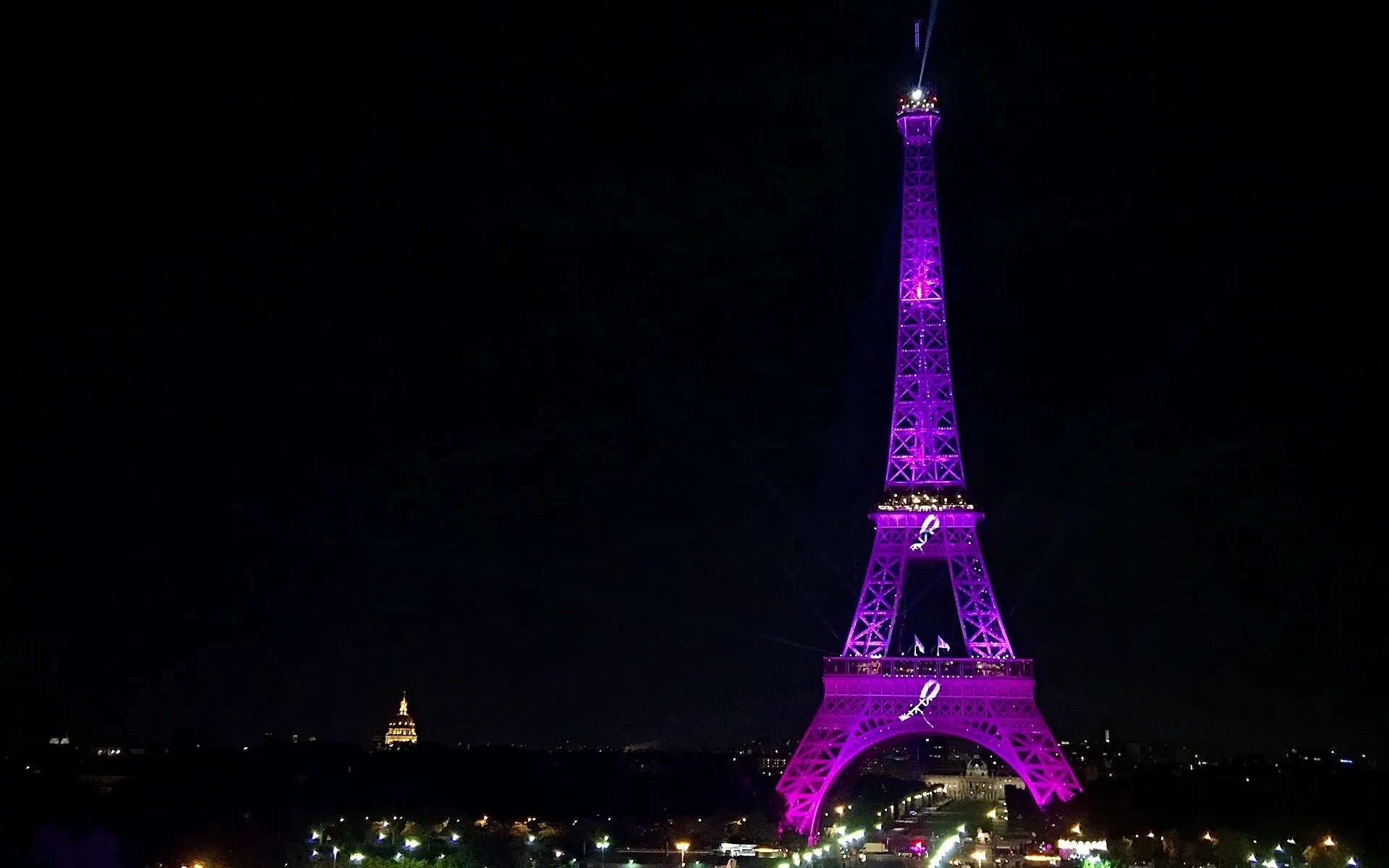
The Eiffel Tower turns pink on September 30 each year, between 20:00 and 24:00 Paris time. The date marks the opening night of Octobre Rose, the French Pink October campaign, and a rose-coloured wash replaces the nightly golden glow across the iron lattice for those four hours.
Within the four-hour window, the five-minute sparkle on the hour still runs in white, overlaid on the pink field. The schedule stays consistent year on year: September 30, 20:00 start, midnight end. The date does not shift when September 30 falls on a weekend. Additional pink illuminations occur later in October on selected awareness-event nights; those dates change from year to year and SETE announces them through the tower's news page.
Photo: “Pink Eiffel tower - Tour Eiffel rose - Paris” by Yann Caradec.
What is Octobre Rose and why the Eiffel Tower turns pink
Octobre Rose is the French counterpart to Pink October, the international breast cancer awareness month held each October. In France, the campaign mobilises civic institutions, hospitals, municipal buildings, and major monuments through partnerships with cancer charities. SETE joined the campaign in the 2010s and uses the tower's lighting rig as a public emblem on the opening night.
The campaign has one purpose: to fund research on breast cancer and encourage regular screening. The Eiffel Tower's participation is symbolic rather than fundraising-centred, but crowds at the Champ de Mars (the park facing the tower) and photographers pointing cameras at the monument spread the campaign message across Paris and beyond. Paris mobilises alongside the tower, with municipal buildings and cultural institutions also lighting up pink to mark the launch of Pink October.
Is the Eiffel Tower pink all of October
The Eiffel Tower is not pink for the entire month of October. The primary pink lighting is the four-hour window on September 30, which opens the Pink October campaign. Between the opening night and the next scheduled pink event, the tower returns to its standard golden illumination with the nightly white sparkle on the hour.
October does bring additional pink events, but only on specific dates chosen each year. These dates track awareness milestones: the campaign's closing event, anniversaries of partner charities, other scheduled moments. Each year's confirmed dates land on the tower's news page, so an October trip means checking the official schedule close to your dates. No permanent pink-lighting month. No repeating daily schedule. No hourly pink block inside the standard nightly illumination.
Where to watch the pink illumination in Paris
Three ground-level spots give the clearest view, each with a transit stop within walking distance.
- The Trocadero esplanade across the Seine offers the most photographed angle of the tower's full height lit pink. Crowds fill the steps and terraces for the 8 PM launch moment, facing the tower across the river.
- The Champ de Mars, the park at the foot of the tower, puts visitors right under the pink wash. Families and picnic crowds settle in from late afternoon. Bus lines stop within a five-minute walk of the monument. The Champ de Mars - Tour Eiffel rail stop sits an eight-minute walk from the tower, and the Bir-Hakeim metro stop is an eleven-minute walk to the north.
- Pont d'Iéna, the bridge linking Trocadero to the tower, brings visitors close to the iron lattice glowing pink while the sparkle overlays white every hour. Pedestrians cross here from either bank.
Pink nights pull bigger crowds than the nightly sparkle. Plan to reach a vantage point before 19:30; on weekend editions of September 30, arrive earlier. For travellers already holding a day ticket, the Batobus river shuttle has a Tour-Eiffel stop.
How to tell the pink illumination from the sparkle
The tower runs three distinct lighting behaviours each night. Visitors mix them up.
| Lighting mode | Golden illumination |
|---|---|
| How it looks | A warm, continuous golden covering across the iron lattice |
| When it runs | Every evening from dusk onwards |
| Notes | The nightly baseline; the tower's standard look |
| Lighting mode | Hourly sparkle |
|---|---|
| How it looks | White flashes dancing across the full tower for five minutes |
| When it runs | The first five minutes of each hour on the hour, every evening |
| Notes | Runs in white even during colour-event nights |
| Lighting mode | Beacon |
|---|---|
| How it looks | A rotating double light sweeping over Paris |
| When it runs | Every evening alongside the golden illumination |
| Notes | Visible far beyond the immediate Champ de Mars area |
| Lighting mode | Special colour event |
|---|---|
| How it looks | A single colour wash (pink, blue, tricolour, rainbow, and others) covering the full lattice |
| When it runs | Only on dated events announced by SETE, from 20:00 to 24:00 |
| Notes | Replaces the golden look for the evening; the sparkle continues in white |
A few facts clarify the difference. Sparkle always white, even on a pink night. The hourly five-minute sparkle runs as white flashes overlaid on the pink field. Golden illumination is the everyday baseline and returns the day after every special event. Every colour event gets scheduled ahead of time by SETE. Those interested in the full five-minute sparkle schedule can consult the separate five-minute sparkle show that runs on the hour after dark, and those curious about the exact number of lamps and sparkle bulbs can read the technical breakdown of the lighting infrastructure and bulb count.
All the other colors the Eiffel Tower turns
Beyond pink, other colour illuminations tie to specific causes and dates. Five categories cover the calendar.
- Health awareness campaigns: Pink for Octobre Rose on September 30 anchors this category. Other health-related illuminations have joined international awareness days. SETE organises a single evening of themed lighting to coincide with each cause.
- National memorials and celebrations: Tricolour (blue, white, and red) for Bastille Day, when the tower participates in the annual July 14 fireworks over the Champ de Mars. The same tricolour display has appeared for major national anniversaries and for state mourning periods.
- European and international tributes: Blue covers European events, from Europe Day to moments linked to France's role within the European Union. Late February 2022 brought blue and yellow: the Ukraine solidarity tribute, showing the Ukrainian flag colours in the days after the invasion of Ukraine.
- Major sporting events: Olympic colours surrounded the Paris 2024 Olympic and Paralympic Games, tied to the opening and closing ceremonies. Other championships hosted in Paris have also prompted sporting lightings. SETE publishes the exact palette and timing for each event.
- Cultural, social, and seasonal lightings: Rainbow for Pride events, and for tragedies affecting LGBTQ+ communities. Christmas and New Year have seen themed white and cold-blue effects. For anniversaries of partner institutions and cultural commemorations, SETE has lit the tower in distinct colours too.
Each colour event lands on the tower's news page ahead of the date, posted by SETE. Most run a single evening. Multi-day illuminations have happened for major commemorations and for the Paris 2024 Games. On the following evening, the default golden covering returns.
A brief history of Eiffel Tower illumination
Illumination has shaped the Eiffel Tower's identity since 1889. Four moments tell the story.
- 1889. The tower opens as the centrepiece of the Exposition Universelle, the fair that celebrated the centennial of the French Revolution.
- 1925 to 1936. The French car manufacturer Citroën installed its name in luminous letters down the tower's spire as an advertising backdrop.
- The modern golden look. Today's warm golden covering has been in place for decades. SETE calls it the standard evening look. Visitors expect it as the nightly baseline.
- The sparkle and the beacon. The hourly five-minute sparkle and the beacon that sweeps across Paris run every evening on top of the golden illumination.
Readers can explore the broader nightly lighting of the tower and its illumination schedule to see how the system has evolved and how it fits into the tower's nightly schedule year round.
Can visitors photograph the pink Eiffel Tower at night
Photographing the pink Eiffel Tower at night is legal for personal use but restricted for commercial use. The restriction comes from a French court ruling. In June 1990, a French court held that a special lighting display on the tower in 1989 to mark the tower's 100th anniversary was an "original visual creation" protected by copyright. The Court of Cassation, France's judicial court of last resort, upheld that ruling in March 1992. SETE now considers any illumination of the tower a separate artwork that falls under copyright.
The practical effect is narrow. Personal photos of the tower lit pink, shared on personal social channels, fall within the same tolerated zone as photos of the nightly golden illumination. Commercial use, including paid advertising, commercial stock libraries, and monetised video content, requires written permission from SETE. Editorial and journalistic use falls within accepted limits. The tower itself, as a structure, entered the public domain in 1993, 70 years after Eiffel's death, so daytime photographs carry no such restriction.
Practical tips for a pink-illumination evening
Visitors planning an evening on September 30 face heavy crowd conditions and a narrow window to reach a prime vantage point.
- Arrive at the Champ de Mars or Trocadero by 19:30 to secure a clear sightline before the 20:00 pink switch-on.
- Visitors who want to see the pink illumination from inside the tower rather than from below can consider an elevator guided tour that allows evening visits during special illuminations; this option provides platform views during the four-hour pink window.
- Nightly visiting times on September 30 follow the tower's regular evening schedule; those planning a visit should check when the tower is open for visits during October illumination season.
- For late return to central Paris, Paris metro trains run until 01:00 on weekdays and later on weekends; visitors should check the current schedule ahead of the visit.
- Visitors arriving from outside central Paris can plan the route using directions and transport options for viewing the tower at night, which covers transit, rideshare, and walking access to the main vantage points.
What visitors say about the pink Eiffel Tower
Reactions online focus on the emotional charge of the evening and the contrast with the usual golden glow. Many visitors frame the tower as a civic symbol for the public-health campaign.
As one Parisian writes on r/SocialParis, "Tomorrow the Eiffel Tower will be lit with pink lights (from 20:00 to 00:00) to bring awareness to the fight against breast cancer. It will probably be a beautiful sight to see, and I don't plan to miss it."
A commenter on the same thread adds, "The Assemblée Nationale, Place de la Concorde and Place Vendôme will also be lit." The pink night extends across the Paris skyline, not only the Eiffel Tower.
Local lifestyle page Cup of Paris frames the evening on its Facebook post: "The Eiffel Tower lights up Pink tonight to show their support for Breast Cancer Awareness Month for October. The Eiffel Tower will light up at 8 until midnight."
A Paris-based photographer gives a rooftop angle on Facebook: "This evening the Eiffel Tower lights up in pink for Pink October. From 8pm to midnight, to raise awareness about breast cancer. Captured from the roofs of Paris."
Main photo: “Octobre rose pour le cancer du sein - Pink Eiffel tower, Tour Eiffel en rose - National Breast Cancer Awareness Month” by Yann Caradec.